


George Washington "Eagle and Star" Inaugural Button — 1789
George Washington "Eagle and Star" Inaugural Button — 1789
Updated on November 5, 2026: This has been sold.
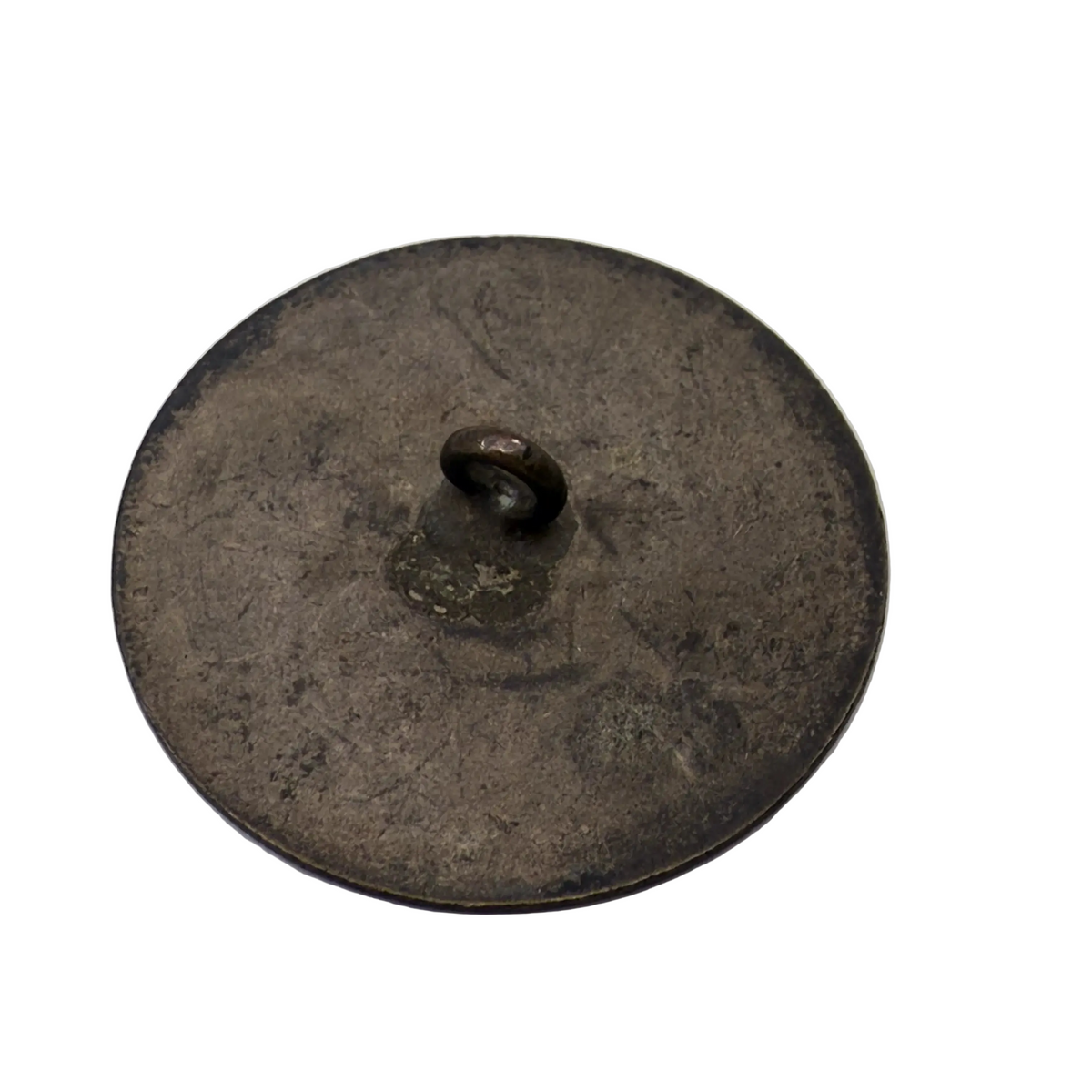
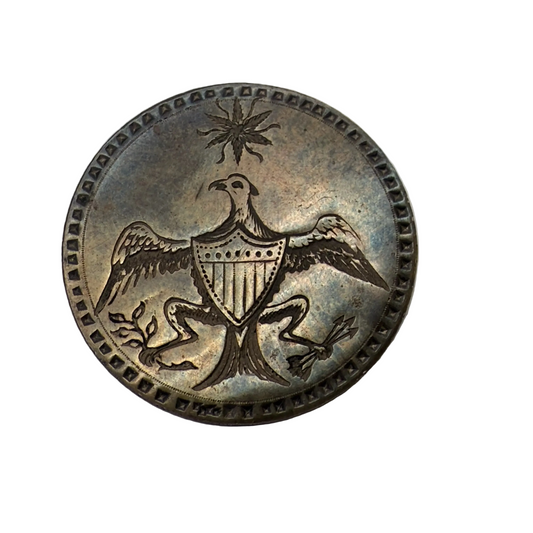
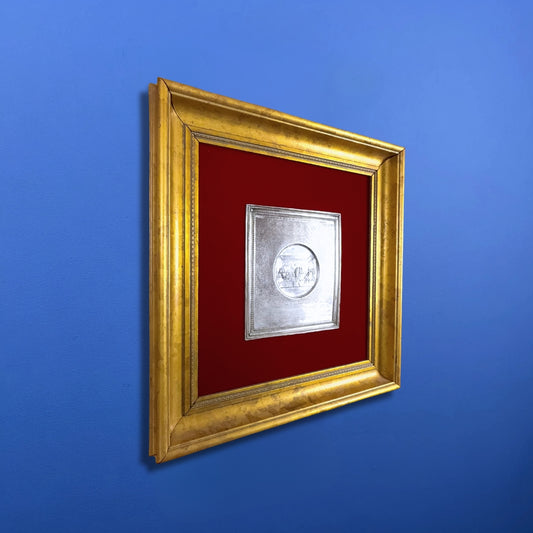
This button was produced for Washington’s first inauguration in 1789. Featuring a splayed-eagle design with a shield on its chest, holding an olive branch in one talon and arrows in the other, topped by an estoile (star). Surrounded by 63 incuse dots, or indentations forming the outer border.
This is an opportunity to own one of the most desired original items from the time of Washington’s presidency—and something directly tied to that event. Ours is in very good condition and the shank is intact. — Lee Wright | Founder
Shipping: $20. Please allow two weeks for shipping.
Historical background on the inaugural buttons
Historical background on the inauguration
On the morning of April 30, 1789, crowds began to gather in front of the presidential mansion in New York City. According to the diary of Tobias Lear, Washington’s personal secretary:
Fisher Ames “sat entranced,” writing “It was a very touching scene, and quite of the solemn kind. His aspect grave, almost to sadness; his modesty, actually shaking; his voice deep, a little tremulous, and so low as to call for close attention.”
Following the address, the president and the members of the House and Senate walked about seven hundred yards to St. Paul’s Chapel to attend services conducted by the Rev. Dr. Samuel Provoost, bishop of the Episcopal church of New York and rector of Trinity Church. After prayers and the singing of a Te Deum, Washington retired to the presidential mansion. He apparently dined quietly at home; then as Lear noted in his diary,
“the President, Colonel Humphreys, and myself went in the beginning of the evening in the carriages to Chancellor Livingston’s and General Knox’s, where we had a full view of the fire-works.”
On his way to Livingston’s, Washington halted to admire the house of the French minister, the comte de Moustier,
"illuminated and decorated with several transparencies relative to the victories and virtues of General Washington. He seemed pleased with the one representing eleven bees emerging from their hives, headed by their queen, with this epigraph from Virgil: “Ille operum custos; illum admirantur et omnes / Circumstant fremitus denso.” (“He is the guardian of their toils; they all admire and stand around him in a noisy crowd.”)"
Don Diego de Gardoqui reported to the Spanish minister of State that he had decorated his house
"with two magnificent transparent gardens, adorned with statues, natural size, imitating marble…. There were also various flower-pots, different arches with foliage and columns of imitation marble, and on the sky of these gardens were placed thirteen stars, representing the United States of America—two of which stars showed opaque, to designate the two States which had not adopted the Constitution."
Washington and his party returned to the presidential residence about ten o’clock in the evening, traveling on foot because the crowds thronging the streets were too great to permit the passage of carriages.
Source: Seth Kaller
Made by America
Made by America
Almost all of the new products we offer are designed by us and made in America and most of our Rare Finds were made in America.
Our original designs are based on our nation’s history and our love of American history. Read more about other things we've created, including The History List, History Camp, and The Pursuit of History, in addition to The History List Store.
Every product that is made in America states that in the product description and includes the "Made in U.S.A." graphic.