


Colonial Currency — Philadelphia — November 29, 1775 — Seven Dollars — Signed by Samuel Morris and John Bayard
Colonial Currency — Philadelphia — November 29, 1775 — Seven Dollars — Signed by Samuel Morris and John Bayard
Updated on August 20, 2026: This has been sold.
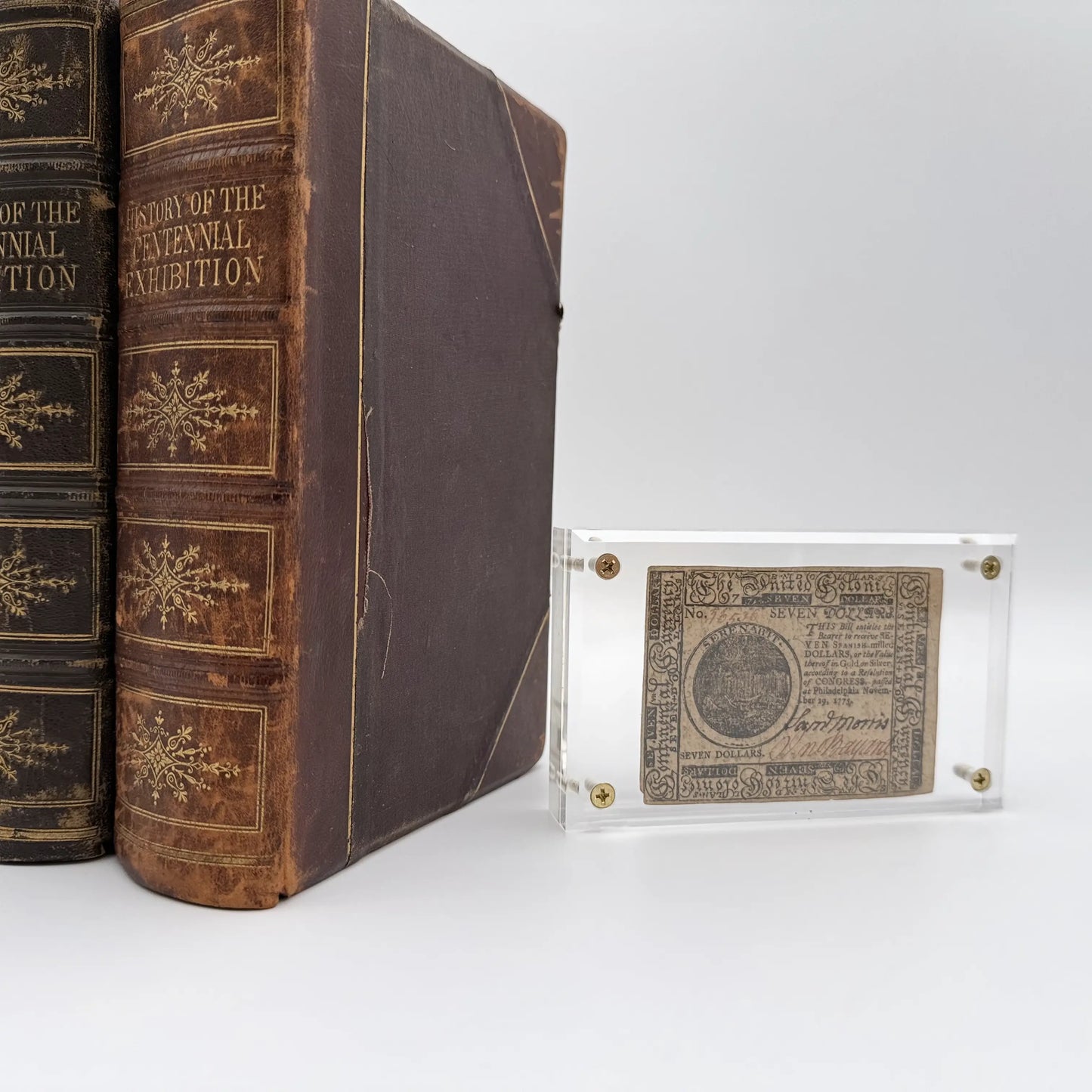
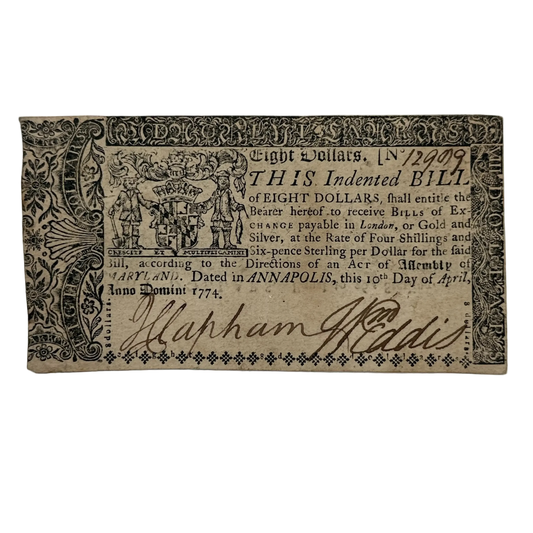
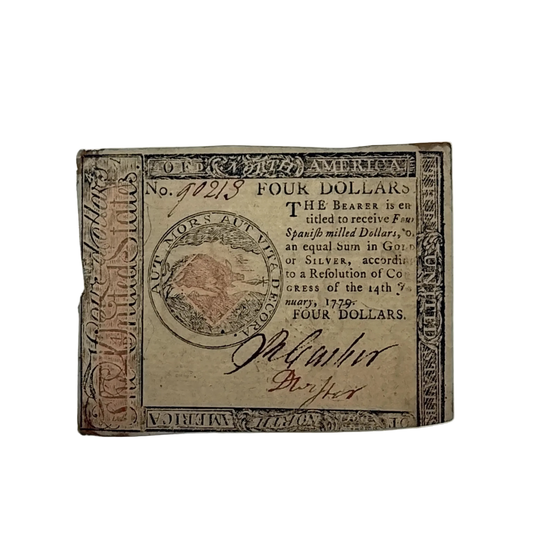
Continental Currency Seven Dollars note printed by Hall and Sellers in Philadelphia used on resolution passed in Congress on November 29, 1775.
Hall (and later adding sellers) had purchased Franklin's printing business.
Signers are Samuel Morris and John Bayard.
The front includes the “SEVEN DOLLARS” denomination, serial number, engraved border, and the circular emblem with the motto SERENABIT, meaning “it will clear up.”
See below for more on the design and the signers.
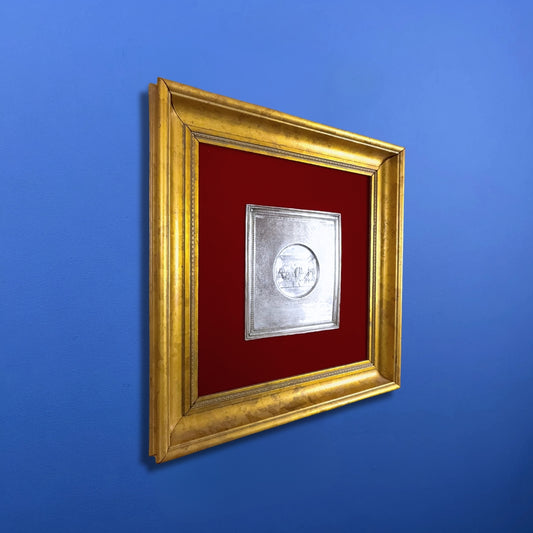
The note is enclosed in a 4" x 6" freestanding Lucite frame.
Shipping: $15. Please allow two weeks for shipping.
Historical background on this note
One of these notes is also in the collection of The Metropolitan Museum of Art. Here is their description of the note and the historical background:
"In the spring of 1775, friction between Britain and her colonies evolved into open hostilities. The future United States of America had few assets that could be turned into money, so the May 10, 1775 session of the Continental Congress authorized the first federally issued paper currency. Circulating alongside Colonial Notes, this "Continental Currency" entitled the bearer to face value in gold or silver, based on the Spanish milled dollar known as the 'Piece of Eight.' Continental Currency provided critical financing for the American Revolution, though the notes said nothing about redemption because the Continental Congress had no money with which to honor them.
"An emission totaling $3,000,000 payable in Spanish milled dollars, or the equivalent in gold or silver, was authorized by the Continental Congress resolutions of November 29, 1775 with a supplemental $10,000 added on January 6,1776 for the replacement of worn out bills. Printed by Hall & Sellers of Philadelphia, most of the notes had a similar appearance with an allegorical vignette on the face (most of which were suggested by Ben Franklin). The back featured a detailed image impressed by a lead plate – an anti-counterfeiting device created by Ben Franklin. Each printed note bore serial numbers and signatures added by hand. Denominations printed were the: $1, $2, $3, $4, $5, $6, $7 and $8. On this seven dollar bill is the picture of a heavy storm. The rain is pouring upon the earth from black clouds, yet there is a bit of clear sky seen in the distance. The motto is SERENABIT — 'It will clear up.'"
More on the signers from Wikipedia:
Samuel Morris (November 21, 1711 – April 1782) was a merchant and Patriot in colonial and revolutionary-era Philadelphia, Pennsylvania.
John Bubenheim Bayard (August 11, 1738 – January 7, 1807) was a merchant, soldier, and statesman from Philadelphia, Pennsylvania. He achieved the rank of colonel while serving with the Continental Army, and was a delegate for Pennsylvania to the Congress of the Confederation in 1785 and 1786. Later he was elected as mayor of New Brunswick, New Jersey.
Made by America
Made by America
Almost all of the new products we offer are designed by us and made in America and most of our Rare Finds were made in America.
Our original designs are based on our nation’s history and our love of American history. Read more about other things we've created, including The History List, History Camp, and The Pursuit of History, in addition to The History List Store.
Every product that is made in America states that in the product description and includes the "Made in U.S.A." graphic.