


"U.S. Army in Action" Prints
"U.S. Army in Action" Prints
Updated August 8, 2026: There are sold.
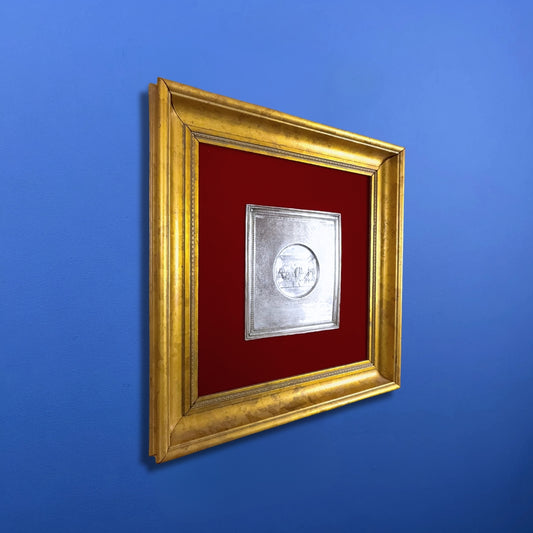
A series of prints with images depicting the U.S. Army in Action.
Published in Washington, D.C. by the U.S. Government Printing Office in 1954.
Prints available:
- Remember your Regiment — Mexican-American War
Resaca de la Palma, Texas, 9 May 1846. Here Captain Charles A. May's squadron of the 2d Dragoons (now 2d Armored Cavalry Regiment) slashed through the enemy lines in an attack that climaxed the opening campaigns of the Mexican War. Their bravery proved that the 2,500 American soldiers under Zachary Taylor had enough self-confidence and pluck to shatter the Mexican force of 6,000 and eject it forever from Texas. Thereafter throughout the war our Army never lacked daring. May's attack order was simple and effective: "Remember your regiment and follow your officers.
- SOLD — Good Marksmanship and Guts! — Red Cloud's War
Near Fort Phil Kearney, Wyoming, 2 August 1867. The Wagon Box Fight is one of the great traditions of the Infantry in the West. A small force of 30 men on the 9th Infantry led by Brevet Major James Powell was suddenly attacked in the early morning hours by some 2,000 Sioux Indians. Choosing to stand and fight, these soldiers hastily erected a barricade of wagon boxes, and during the entire morning stood off charge after charge. The Sioux finally withdrew, leaving behind several hundred killed and wounded. The defending force suffered only three casualties. By their coolness, firmness and confidence these infantrymen showed what a few determined men can accomplish with good marksmanship and guts.
- SOLD — Follow Me! — WWII
Leyte, Philippine Islands, 20 October 1944. The American Army returned to the Philippines over the beaches of Leyte Island. Red Beach was defended by the Japanese occupying a number of large, well-camouflaged pillboxes. Immediately after their landing, the leading elements of the 3d Battalion, 34th Infantry - one of the units of the U.S. Army's 24th Division - were pinned down by heavy machine gun and rifle fire. The Regimental Commander, Colonel Aubrey S. Newman, arrived on the beach and, taking in the situation at a glance, shouted to his men: "Get up and get moving! Follow me!" News of the success of the American Forces in establishing a beachhead on Leyte - the first foothold in the Philippine Islands - was joyfully received by the American nation. The President radioed congratulations to General MacArthur and added, "You have the nation's gratitude and the nation's prayers for success as you and your men fight your way back ......
- SOLD — The Battle of Chippewa — War of 1812
Chippewa, Upper Canada, 5 July 1814. The British commander watched the advancing American line contemptuously, for its men wore the rough gray coats issued those untrained levies he had easily whipped before. As the ranks advanced steadily through murderous grapeshot he realized his mistake: "Those are regulars, by God!" It was Winfield Scott's brigade of infantry, drilled through the previous winter into a crack outfit. It drove the British from the battlefield; better still, after two years of seemingly endless failures, it renewed the American soldier's faith in himself.
-
SOLD — First at Vicksburg — Civil War
Confederate Lines, Vicksburg, Mississippi, 19 May 1863. In this assault against bitter resistance the 1st Battalion, 13th Infantry, lost forty-three percent of its men, but of the attacking force, it alone fought its color up the steep slope to the top. General Sherman called its performance "unequalled in the Army" and authorized the 13th Infantry to inscribe "First at Vicksburg" on its color. Although it took two more months of hard fighting to capture Vicksburg and split the Confederacy, no episode illustrates better the indomitable spirit of Americans on both sides.
-
SOLD — "The Rock of the Marne" — WWI
Near Mézy, France, July 1918. Here the German Army made its last great attack of World War I. It struck in the Marne River area along the road to Paris, and the weight of the blow fell on the 30th and 38th U.S. Infantry Regiments of the 3d Division. This was their first fight. Firing in three directions, blasted by artillery fire, taking all flesh and blood could stand, the regiments held on doggedly and threw the enemy back across the Marne. This defense checked the Germans' assault and made an Allied offensive possible. General Pershing called it "one of the most brilliant pages of our military annals.
-
SOLD — Breakthrough at Chipyong-ni — Korean War
In February of 1951, the 23d Infantry Combat Team of the 2d Infantry Division, with attached French and Dutch units, while moving forward to attack in advance of the Eighth Army, was cut off and surrounded by overwhelming forces of Chinese Reds in the narrow Korean valley of Chipyong-ni. The Reds occupied the commanding ridges, while the American commander, Colonel Paul Freeman, isolated far in advance of the general battle line, used a ring of lower hills within the valley itself for his defensive perimeter. For more than three days in near freezing weather the defenders held these positions. The action pictured is on the fourth day when an American armored unit broke through from the south. At this time the valiant 23d Infantry Combat Team smashed out of the perimeter at the lower end of the valley to break the encirclement, and with its units and most of its equipment intact, rejoined the Eighth Army.
General Matthew B. Ridgway in his official report to a Joint Session of Congress said of this action: "These American fighting men with their French comrades in arms measured up in every way to the battle conduct of the finest troops America or France has produced throughout their national existence.
- SOLD — Knocking Out the Moros — Philippines-American War
The four-day battle of Bagsak Mountain on Jolo Island in the Philippines took place from 11 to 15 June 1913. Americans of the 8th Infantry and the Philippine Scouts, personally lead by Brigadier General John J. Pershing, brought to an end years of bitter struggle against the Moro pirates. These Bolo men, outlaws of great physical endurance and savage fighting ability, were well organized under their Datus or chiefs. They had never been conquered during several centuries of Spanish rule in the Philippines. The U.S. Army .45-caliber pistol was developed to meet the need for a weapon with enough striking power to stop fanatical charges of lawless Moro tribesmen in hand-to-hand fighting.
-
SOLD — Gatlings to the Assault — Spanish-American War
San Juan Hill, Santiago de Cuba, 1 July 1898. An important yet little known incident in American arms occurred during the assault on San Juan Hill in the War with Spain. The going was tough up the hill, since the Spaniards were well entrenched. Lieutenant John H. Parker was in command of the Gatling Gun Detachment composed of men from four different infantry regiments. Parker believed that his guns, which normally played only a defensive role in battle, could be of decisive importance in the attack by giving fire superiority to the infantry just when most needed. Receiving permission to advance the guns, Parker brought his detachment abreast of the Infantry, in fact ahead of some elements of it, and opened fire. This, the United States Army's first use of close support machine guns in the attack, was decisive in the capture of San Juan Hill. Lieutenant Parker's initiative developed an important principle of fire and maneuver -- the use of close support machine guns in the attack.
- SOLD — "Ill Try, Sir!" — Boxer Rebellion
During the fiercely opposed relief expedition to Peking in the Boxer Rebellion in 1900, when two companies of the U.S. Army's 14th Infantry Regiment were pinned by heavy fire from the east wall of the Tartar City and the Fox Tower between abutments of the Chinese City Wall near Tung Pien Gate, volunteers were called for to attempt the first perilous ascent of the wall. Trumpeter Calvin P. Titus of E Company immediately stepped forward saying, "I'll try, sir!" Using jagged holes in the stone wall, he succeeded in reaching the top. He was followed by the rest of his company, who climbed unarmed, and hauled up their rifles and ammunition belts by a rope made of rifle slings. As the troops ascended the wall artillery fire from Reilly's battery set fire to the Fox Tower. In the face of continued heavy Chinese fire, the colors broke out in the August breeze as the sign that U.S. Army troops had achieved a major step in the relief of the besieged Legations. For his courageous and daring deed in being the first to climb the wall, Trumpeter Titus was awarded the Congressional Medal of Honor.
-
SOLD — Remagen Bridgehead — WWII
Remagen Bridghead, 7 March 1945. Here, on the Ludendorf Bridge crossing the Rhine at Remagen, Combat Command B, 9th Armored Division -- headed by the 27th Armored Infantry Battalion -- with "superb skill, daring and esprit de corps" successfully effected the first bridgehead across Germany's formidable river barrier and so contributed decisively to the defeat of the enemy. The 27th Battalion reached Remagen, found the bridge intact but mined for demolition. Although its destruction was imminent, without hesitation and in face of heavy fire the infantrymen rushed across the structure, and with energy and skill seized the surrounding high ground. The entire episode illustrates that high degree of initiative, leadership and gallantry toward which all armies strive but too rarely attain, and won for the Combat Command the Distinguished Unit Citation.
Size: 20" x 24"
Shipping: $15. Please allow two weeks for shipping.
Made by America
Made by America
Almost all of the new products we offer are designed by us and made in America and most of our Rare Finds were made in America.
Our original designs are based on our nation’s history and our love of American history. Read more about other things we've created, including The History List, History Camp, and The Pursuit of History, in addition to The History List Store.
Every product that is made in America states that in the product description and includes the "Made in U.S.A." graphic.